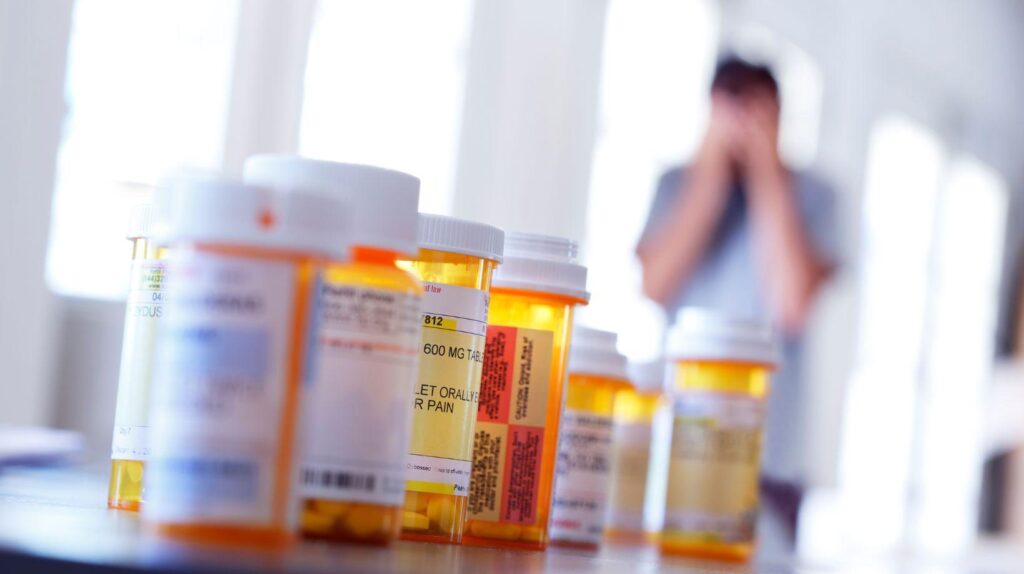
Nobody hands you a manual when someone you love develops an opioid addiction.
You’re left scrambling — searching the internet at midnight, second-guessing every conversation, wondering if pushing too hard will make things worse or if backing off means giving up. It’s exhausting, confusing, and emotionally draining in ways that are genuinely hard to describe to people who haven’t lived it.
Here’s the truth: you can’t do this perfectly. But you can do it wisely. And having the right information — about treatment, recovery, finances, and your own limits — makes an enormous difference.
This guide is designed to give families and close friends a grounded, honest look at what supporting opioid recovery actually involves.
Here’s what this guide covers:
- Understanding Opioid Use Disorder
- How to Start the Conversation
- Finding the Right Treatment
- What Recovery Timelines Actually Look Like
- Navigating the Financial Side
- Supporting Without Burning Out
- Building a Recovery-Friendly Home Environment
- Resources Worth Bookmarking
Understanding Opioid Use Disorder
It’s a Medical Condition, Not a Character Flaw
One of the most important shifts a family can make is in how they frame the problem. Opioid use disorder (OUD) is a chronic medical condition recognized by the American Medical Association and every major public health authority. It’s driven by changes in brain chemistry — specifically how the brain processes reward, pain, and stress — not by weakness or poor character.
That doesn’t mean choices don’t matter. It means that shaming or moralizing rarely gets anyone into treatment. What the research consistently shows is that people are far more likely to seek help when they feel supported rather than judged.
Understanding this distinction changes how you communicate, how you set limits, and how you avoid taking relapses personally. It won’t make things easy. But it will make your approach considerably more effective.
How to Start the Conversation
Most families wait too long to have the direct conversation. They hint, they hope, they quietly remove prescription bottles from medicine cabinets. It feels safer than a confrontation that might go badly. But avoidance has its own cost.
The goal of an initial conversation isn’t to win an argument or force a decision — it’s to open a door. Choose a time when your loved one is sober, not in the middle of a crisis, and not about to leave for work. Keep it grounded in specific observations rather than broad accusations. “I’ve noticed you’ve been pulling away from the family” lands very differently than “you’re destroying our lives.”
If you’ve already had this conversation and it didn’t go well, that’s not unusual. Most people with OUD need more than one honest conversation before they’re ready to engage with treatment. Resistance doesn’t mean a dead end. It rarely does.
Should You Consider a Formal Intervention?
Structured interventions — particularly those facilitated by a trained professional — can be effective when done correctly. The key phrase there is “done correctly.” A poorly planned confrontation with a room full of frustrated family members can backfire and push someone further away. If you’re considering a formal intervention, look for a credentialed specialist trained in evidence-based approaches like CRAFT (Community Reinforcement and Family Training) or ARISE, both of which prioritize communication that is firm without being combative.
Finding the Right Treatment
Treatment for opioid use disorder is not one-size-fits-all, and the options have expanded significantly over the past two decades. Understanding what’s available helps you and your loved one make informed decisions rather than default to whatever is most visible or most accessible in a moment of crisis.
Medication-Assisted Treatment: The Current Standard of Care
Medication-assisted treatment (MAT) is considered the gold standard for OUD by the Substance Abuse and Mental Health Services Administration (SAMHSA) and the American Society of Addiction Medicine. The three FDA-approved medications are methadone, buprenorphine (often dispensed as Suboxone), and naltrexone (branded as Vivitrol).
Buprenorphine is a partial opioid agonist, meaning it binds to the same receptors as opioids but doesn’t produce the same intensity of effect. That property makes it highly effective at reducing cravings and withdrawal symptoms while significantly lowering the risk of misuse. It can be prescribed by any qualified physician, nurse practitioner, or physician assistant with prescriptive authority — which means your loved one doesn’t necessarily need to travel to a specialized clinic every single day.
Methadone, by contrast, must be dispensed through a federally certified opioid treatment program (OTP), typically requiring daily clinic visits in the early stages of treatment. It’s highly effective for people with severe OUD but demands more logistical commitment from the patient.
Naltrexone works differently. It’s an opioid antagonist that blocks the effects of opioids entirely. It’s most appropriate for someone who has already completed a full medical detox and is fully opioid-free, because taking it while opioids are still present in the system will trigger immediate, severe withdrawal.
Inpatient vs. Outpatient: What’s the Right Fit?
The level of care your loved one needs depends on several factors: the severity of the addiction, the presence of co-occurring mental health conditions, the stability of their home environment, and their history with prior treatment attempts.
Inpatient or residential treatment provides around-the-clock care in a structured setting. It removes the person from environments and social triggers that reinforce the addiction cycle. It’s typically recommended for people with severe OUD, unstable living situations, or previous unsuccessful treatment attempts.
Outpatient treatment — which includes both standard outpatient programs and intensive outpatient programs (IOP) — allows the person to live at home while attending regular counseling sessions, medication appointments, and group therapy. It works well for people with strong support networks and stable home environments, and it’s considerably more affordable. There’s no universally “better” option. What matters most is the right level of care for the right person at the right moment.
What Recovery Timelines Actually Look Like
Here’s what most families are never told: recovery is not linear. Expecting a 30-day program to permanently solve a years-long addiction is one of the most common — and most painful — misconceptions families carry into the process.
The early phase of recovery, typically the first 90 days, is the most fragile. The brain is still recalibrating. Social triggers are everywhere. Mood is unpredictable. This is why ongoing medication management and consistent therapy matter so much during this window — not just detox.
Most addiction specialists consider the first year of recovery the highest-risk period for relapse. That’s not a reason to despair; it’s a reason to keep support structures firmly in place well beyond an initial treatment program. Long-term success rates improve significantly for people who stay engaged with medication management, counseling, and peer support groups like Narcotics Anonymous or SMART Recovery for at least 12 to 24 months.
Relapse, if it happens, is not evidence that treatment failed or that your loved one doesn’t want to get better. It’s a sign that the disease is serious and that the current plan may need adjustment. The appropriate response is to reconnect with a treatment provider and recalibrate — not to walk away.
Navigating the Financial Side of Treatment
Cost is one of the most frequently cited barriers to addiction treatment in the United States, and it’s a legitimate concern. As you research treatment plans together, don’t overlook the practical side — understanding buprenorphine cost and whether it’s covered under your loved one’s health plan can remove one major barrier to starting treatment.
Under the Affordable Care Act, most health insurance plans — including Medicaid — are required to cover substance use disorder treatment. But coverage varies widely in practice. Some plans cover medication-assisted treatment fully; others require prior authorization, step therapy, or limit the duration of coverage. It pays to call the insurance provider directly and ask specific questions: What’s covered? What are the copays? Are there in-network MAT providers in your area?
If your loved one is uninsured or underinsured, options still exist. SAMHSA maintains a national directory of treatment facilities that offer sliding-scale fees or accept state-funded assistance. Many pharmaceutical manufacturers also offer patient assistance programs that reduce out-of-pocket medication costs significantly.
The financial piece of recovery is stressful, especially if addiction has already created economic strain in your household. Keeping a clear-eyed view of what coverage exists and what programs are available prevents impulsive decisions — like liquidating savings for a luxury residential facility that isn’t necessarily more effective than a well-run outpatient program nearby.
Supporting Without Burning Out
The people who support someone through recovery often sacrifice their own physical and mental health in ways they don’t notice until the damage is done. Secondary trauma is real. Chronic anxiety, disrupted sleep, social isolation, and depression are genuinely common among family members of people with addiction — particularly when those family members feel solely responsible for managing the situation.
You cannot pour from an empty vessel. It’s a cliché because it holds up.
Setting Limits That Actually Hold
Setting limits with a loved one who has OUD is not about punishment — it’s about sustainability. Giving unlimited access to money, consistently covering up consequences, or absorbing every emotional crisis without any support for yourself will eventually lead to your own breakdown. It also removes the external accountability structures that can meaningfully motivate someone to stay engaged with treatment.
Effective limits are specific, communicated calmly, and followed through consistently. “I won’t cover rent if you’re not attending your MAT appointments” is a limit. “You need to get your life together” is not.
Protect Your Own Mental Health Along the Way
Family support groups like Al-Anon and Nar-Anon exist specifically for people in your position. They’re free, widely available, and full of people who understand what you’re living through in a way most friends and coworkers simply can’t. Individual therapy — particularly from a counselor familiar with addiction family dynamics — is worth pursuing if your stress levels are high and your personal support network is thin.
A few other practices that make a measurable difference for family supporters:
- Maintain at least one area of your own life that is not defined by your loved one’s recovery — a hobby, a friendship, a weekly routine that belongs entirely to you
- Have a plan for crisis moments before they happen — know who you’ll call, what steps you’ll take, and what your non-negotiables are
- Acknowledge your own grief honestly — loving someone in active addiction involves real loss, and processing that is not weakness; it’s necessary
Building a Recovery-Friendly Home Environment
If your loved one is returning home after inpatient treatment or beginning an outpatient program, the environment they come back to matters more than most families realize. The physical space and the emotional climate of the home are both part of the recovery ecosystem.
On the practical side, this means securing or removing prescription medications that could serve as substitutes. It means having honest conversations about whether alcohol in the home is appropriate during early recovery. It may also mean renegotiating certain social dynamics — gatherings with particular people, for instance, that previously centered on substance use.
On the relational side, it means calibrating your expectations. Early recovery is often emotionally awkward. Your loved one may seem flat, irritable, or distant as their brain chemistry rebalances. This is normal, and it passes. Resist the urge to fill every silence with a check-in about how they’re doing. Aim for a sense of ordinary life when possible — regular meals, shared activities, conversations that aren’t about the addiction — because that normalcy is actually part of what recovery is working toward.
Resources Worth Bookmarking
Navigating opioid recovery support is considerably easier when you know where to look. These are among the most reliable starting points for families:
- SAMHSA National Helpline (1-800-662-4357): Free, confidential, and available 24/7. Connects families and individuals to local treatment resources regardless of insurance status.
- SAMHSA Treatment Locator (findtreatment.gov): A searchable national directory of licensed treatment programs, including MAT providers near you.
- Nar-Anon (nar-anon.org): Peer support specifically designed for family members and friends of people struggling with drug addiction.
- CRAFT (Community Reinforcement and Family Training): An evidence-based approach that coaches family members in specific communication and support strategies — and consistently outperforms traditional confrontational intervention models in research.
Recovery is genuinely possible. Not in every case, not without setbacks, and not on a neat or predictable schedule — but possible, and more often than families in the middle of a crisis are able to believe. Your role in that process matters. So does taking care of yourself well enough to stay in it for the long haul.